

Rewriting the Script: How Adrianna Klimczak Is Changing the Tech Story
From workshops to groundbreaking apps, a mission to change tech culture one initiative, and one girl, at a time.

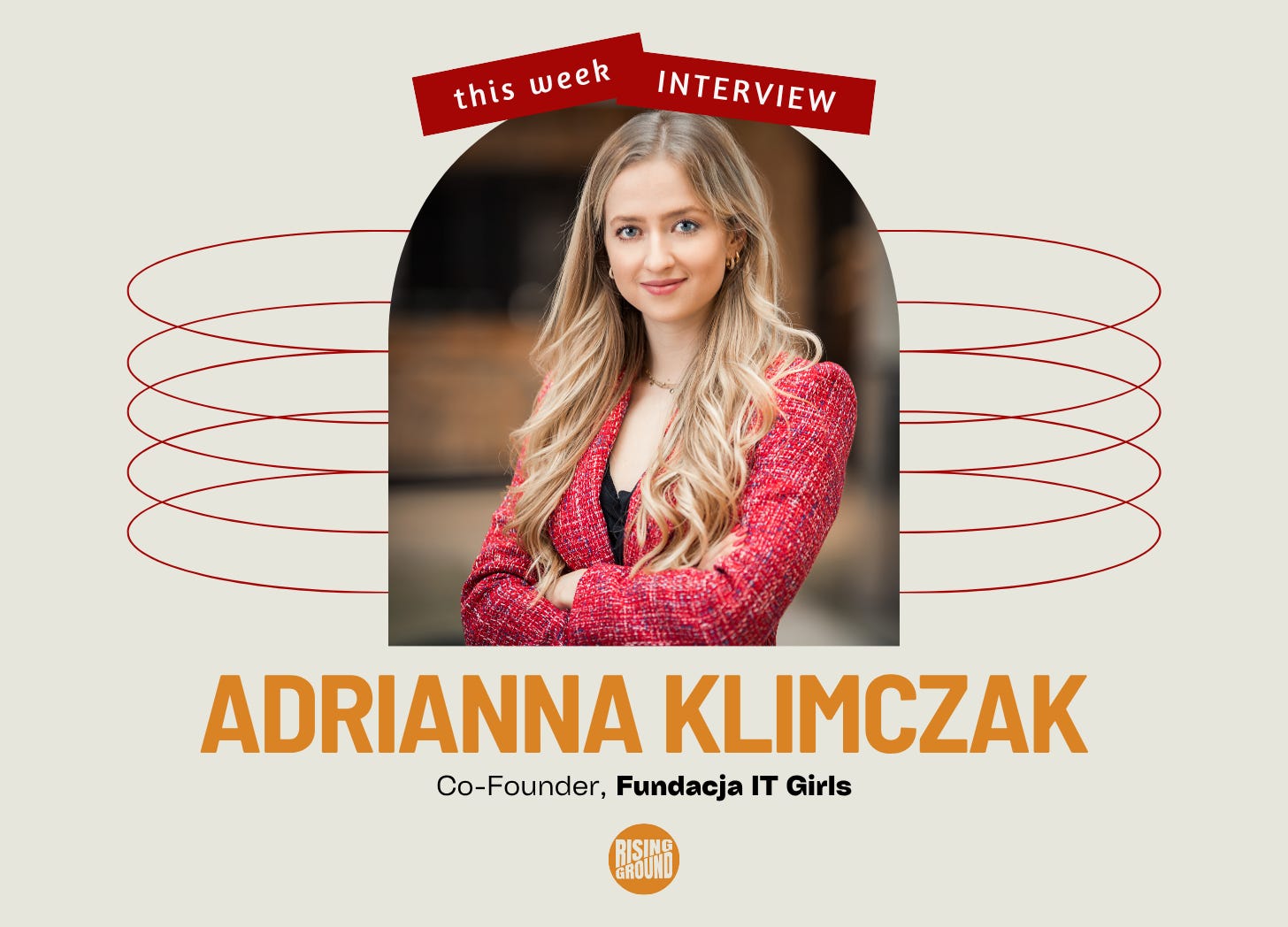
While shows like Mr. Robot often spotlight tech geniuses, they rarely show the diverse faces behind the code - especially women. Adrianna Klimczak is changing that narrative through Fundacja IT Girls, a foundation she co-founded to break down stereotypes and open doors for young women in technology.
By creating inclusive workshops, mentorship programs, and social campaigns, Adrianna is not just encouraging more girls to enter tech - she’s transforming the culture itself, proving that innovation thrives when everyone has a seat at the table. In this interview, she opens up about her own journey from feeling isolated as the only woman in her IT team to leading a movement that’s reshaping how the next generation sees technology, and themselves.
The Spark: How Fundacja IT Girls Began
What inspired you to start Fundacja IT Girls, and what impact have you seen so far ?
My inspiration came from my own experience. I’ve always been drawn to science and math, thanks to my father, who studied computer science and worked in IT. My older sister, now my co-founder, also pursued computer science.
During the COVID-19 lockdown, my sister and I talked a lot about our experiences working in IT and realized how challenging it can be for women. At the time, I was the only woman in the technical division of my company, working in programming and data science for fraud detection. We noticed similar imbalances in many other companies and felt a strong need to make a difference.
About six months later, we began running workshops for 13- and 14-year-olds. Our goal was to show that IT is much more than just programming, it includes roles like data science, UX design, and more. Importantly, we invited entire classes, boys and girls alike, to avoid creating divisions and to demonstrate that IT can be exciting and accessible for everyone.
Since then, Fundacja IT Girls has grown a lot. Now, in our third year, we have nearly 300 volunteers across Poland and a full-time team of four. We offer much more than workshops now : mentorship programs, social media campaigns, and ongoing efforts to break stereotypes. It’s been challenging but incredibly rewarding journey.
What’s one tough moment you faced building Fundacja IT Girls that taught you an important leadership lesson?
There have been many lessons along the way, but one of the hardest times was at the start when my sister and I were both juggling our corporate jobs while building the foundation. After two years and our first big campaign with Intel, Fundacja IT Girls grew quickly. My sister left her corporate job to focus full-time, but I had to keep mine for financial reasons while finishing my master’s degree.
I was essentially working three jobs: my corporate role, school, and managing foundation programs. It was an incredibly difficult period, and I eventually experienced full burnout in my corporate job. Once I was financially able, I left the corporate world — and I haven’t looked back since.
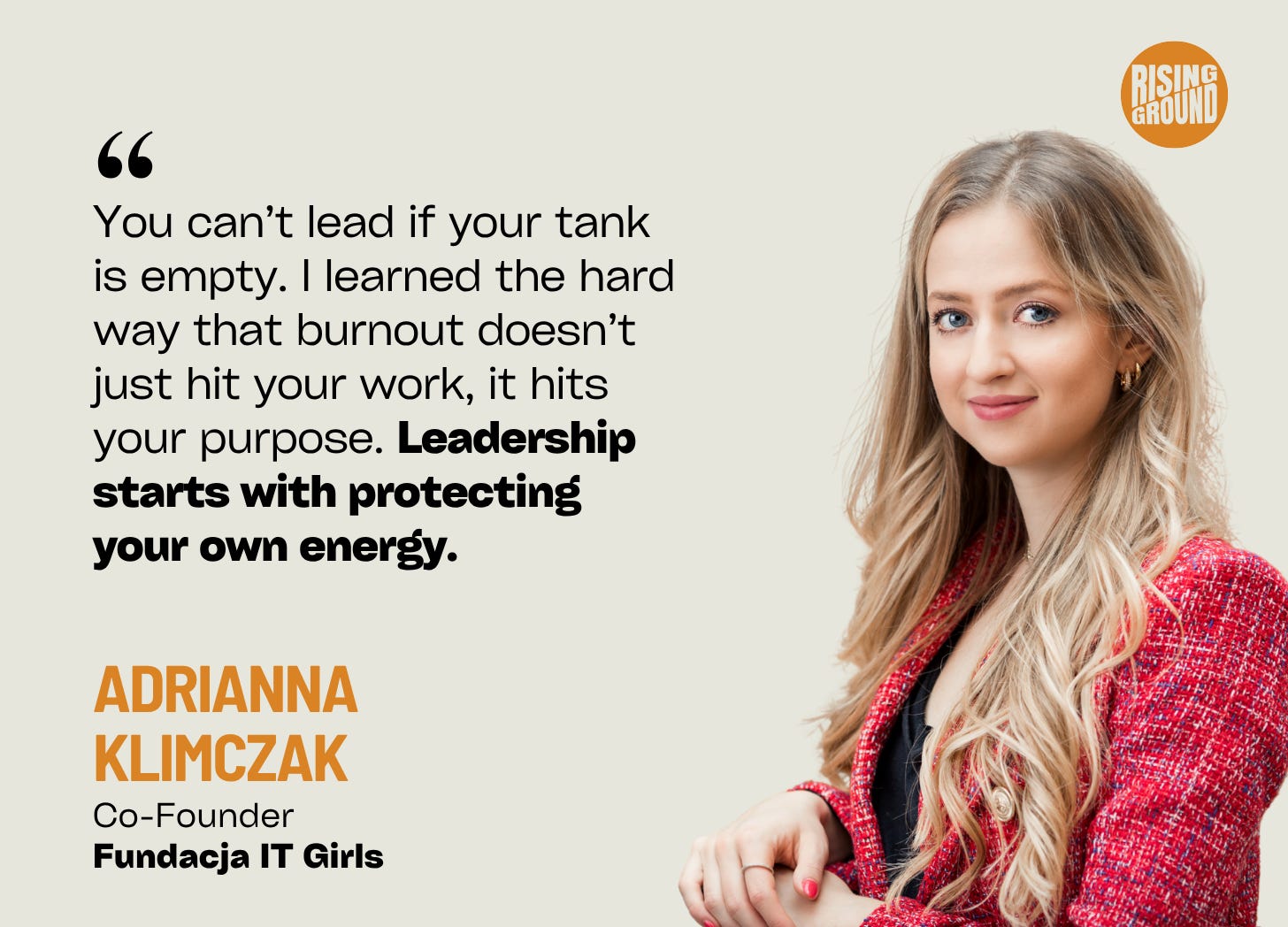
This experience taught me the most important leadership lesson: you must take care of yourself first. Your own “cup“ needs to be full before you can pour into others. When your energy is drained, burnout hits on many levels.
I also learned the value of setting boundaries and knowing when to say “no.” Leading a foundation means people often come to you for help and advice. You have to prioritize what truly deserves your time and energy to avoid feeling overwhelmed.
Staying Motivated & Impactful Projects
When burnout hits, how do you reconnect with your mission?
Honestly, there were many times I questioned whether it was worth it, especially juggling so much. What keeps me grounded is the connection to people, seeing the direct impact of our work.
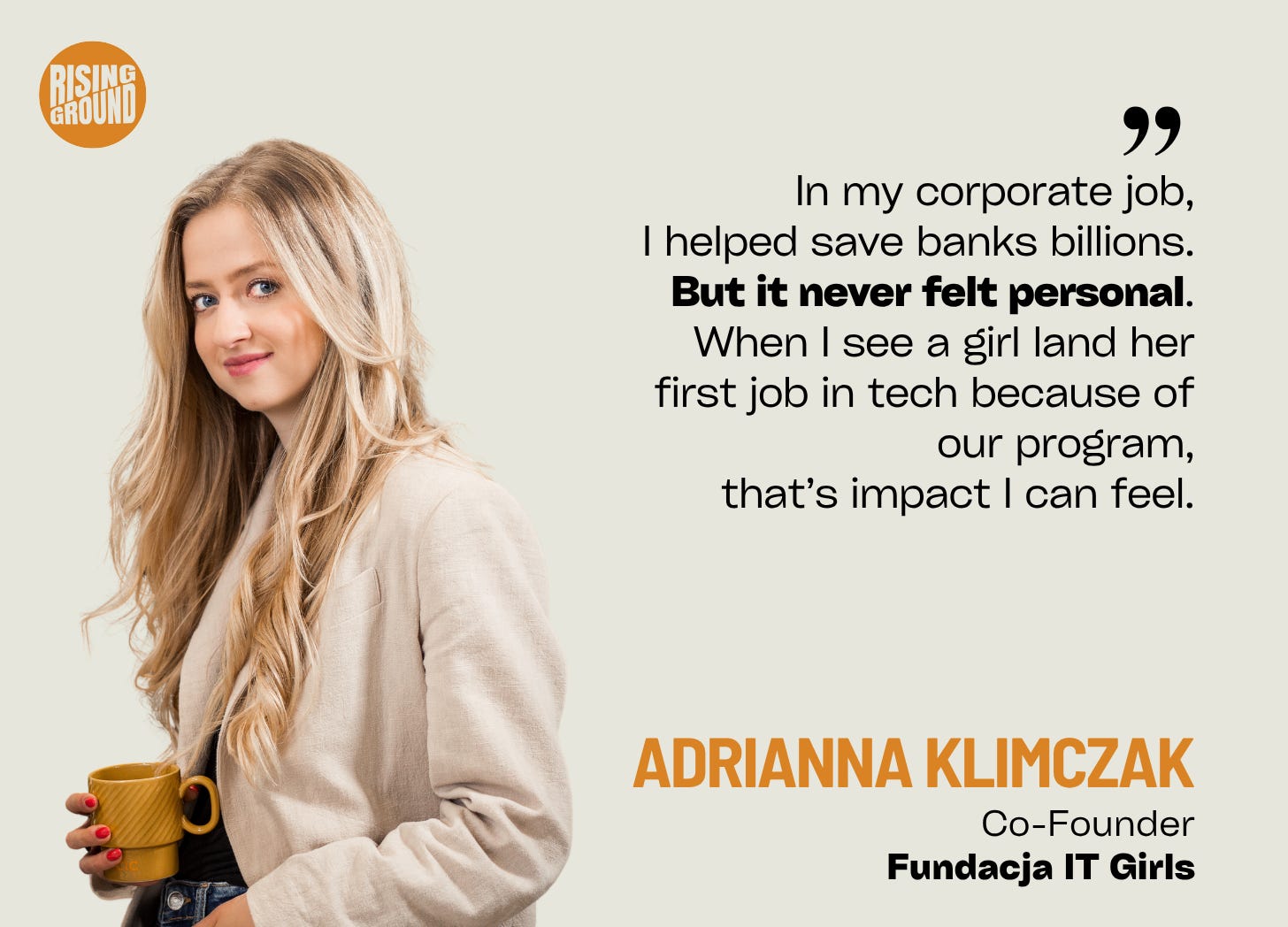
When we first started the workshops, I’d see teenagers leave feeling inspired and encouraged to pursue IT. That hands-on impact was something I missed in my corporate fraud detection job, saving banks billions didn’t feel personally meaningful.
Now, when my work becomes mostly computer tasks, calls, and meetings, and I start feeling overwhelmed, I remind myself to get hands-on again. I will attend mentoring sessions or foundation events to witness the difference we’re making firsthand.
For example, recently I met Paulina, a young woman who got a job at Accenture through one of our programs a year ago. Now, she’s helping build the program from inside the company. Seeing this kind of real, tangible impact is what keeps me going.
Can you tell us about a current project that feels especially meaningful or energizing?
Absolutely! My sister and I are leading a project that’s a bit different from our usual work. We developed an app in partnership with another foundation in Poland, co-founded by supermodel Anya Rubik, which focuses on sexual education. The app, currently called the HomeGirl Initiative (working title), is designed to improve women’s safety.
The idea came from a common experience: when women walk home alone at night, they often call someone they know for safety, but sometimes everyone is asleep. This app allows women to connect with other women, not necessarily friends, who are willing to talk and provide a sense of safety. It’s part of a larger social campaign addressing why women don’t feel safe walking home at night and what can be done about it.
What’s incredible is that our volunteers, mostly women, built the app in their free time, with the generous support of a development company that contributed pro bono. If we had paid for this development, it would have cost around €400,000. Apart from some technical costs like servers, we didn’t spend any money on manpower.
With summer coming1, this project feels especially important. It highlights a sad truth: this app shouldn’t even have to exist if the world were truly safe for everyone.
Shifting Culture & Growing Understanding for Equity
How do you hope your work will change both the numbers and culture around gender and technology?
That’s exactly what we aim to do with our social campaigns. We’ve launched three major campaigns in Poland tackling gender stereotypes, not just related to IT, but broader societal ones.
For example, one campaign highlights a brutal fact: by age six, girls start believing they’re less smart than boys. It’s not about DNA; it’s about how society treats children. We often tell girls to be pretty and gentle, qualities that clash with science, which demands trying, failing, and persisting.
I believe the problem begins with the language we use and how we raise children. It’s a deep cultural challenge that goes beyond parents. For example, my seven-year-old cousin, raised to be empowered, was told by a teacher, “Girls don’t climb trees.” Small comments like that can severely damage a child’s self-belief and willingness to try new things.
That’s why we emphasize the power of words and how we address kids, because it directly influences their confidence and aspirations, especially in fields like technology.
How has your understanding of gender equity evolved since starting Fundacja IT Girls?
My understanding has grown a lot through conversations with people from diverse backgrounds. It’s hard to point to specific moments, but my perspective has definitely expanded.
At first, people would ask, “Why focus on increasing women in IT? Isn’t that unfair to men?” We’ve had countless discussions on gender inequities. From the beginning, we chose to run workshops for both girls and boys, we don’t want to create more divisions. While some programs like mentoring are exclusively for women to provide safe spaces, we believe excluding one gender won’t solve the problem.
In Poland, only around 17% of IT professionals are women, that’s very low figure. Research shows girls start doubting themselves in STEM around age six. When our volunteers work with younger kids, four to six years old, there’s no gender gap in curiosity or interest in coding. But after age seven, girls become more shy and begin questioning whether tech is “for them.”
This harsh reality is largely shaped by culture and language. Even parents who try to empower daughters can’t always shield them from societal messages, like that teacher’s comment I mentioned earlier. This taught me that it is clear that gender equity is a deep cultural issue. We must be mindful of how we speak to children to nurture their self-belief and curiosity.
Adrianna’s journey with Fundacja IT Girls is a powerful reminder that changing tech culture isn’t just about numbers: it’s about rewriting the stories we tell ourselves and future generations. By challenging stereotypes and building inclusive spaces, she’s opening pathways for countless young people to see themselves as creators, innovators, and leaders in tech.
As she puts it, when you change the narrative, you change the future. And with leaders like Adrianna, that future looks brighter, and more diverse, than ever.
This interview was conducted in July 2025.